The Invisible Load — Why You’re Tired Even When You Didn’t “Do Much”
You’re not lazy. You’re carrying invisible mental and emotional work. Here’s how to see it — and reduce it gently.
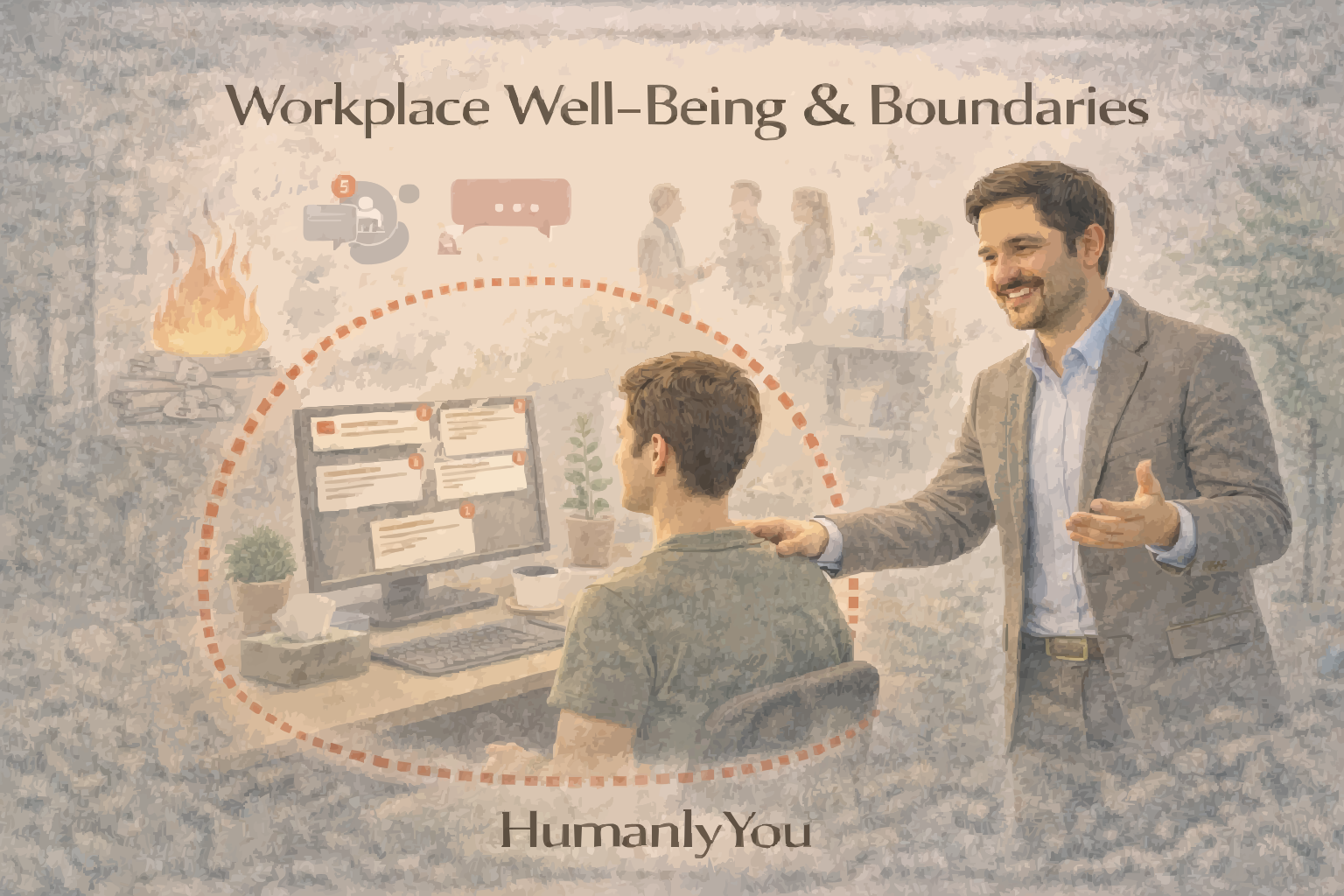
You’re not lazy. You’re carrying more than you can see.
Some days you don’t do a lot on paper — yet you feel exhausted anyway. That kind of tiredness often comes from invisible load: the mental and emotional work your system is doing all day.
Invisible load includes planning, anticipating, worrying, managing emotions (yours and others’), keeping the peace, and holding responsibility in your head. It’s real work — and it drains energy.
Signs you’re carrying invisible load
- You feel mentally busy even when you’re resting
- You’re responsible for other people’s moods or outcomes
- You can’t fully relax because you’re anticipating the next thing
- Small disruptions feel disproportionately irritating
- Conversations leave you tired (not just work tasks)
Why your nervous system doesn’t recover
Recovery requires safety. Invisible load keeps your system mildly activated — like a phone with background apps that never close. Even when you stop working, your mind keeps running open loops.
What helps (without changing your whole life)
- Name the background apps: write down the 5 things you’re mentally holding
- Choose one handoff: delegate, delay, or simplify one item this week
- Create a 5‑minute ‘closing ritual’ at the end of the day: capture open loops + choose tomorrow’s top 1–3
- Protect recovery time with small boundaries (even 15–30 minutes counts)
If invisible load is coming from work dynamics, explore Workplace Well‑Being & Boundaries. If it’s broader exhaustion, Burnout Recovery & Prevention can help.
Related read: Early signs of burnout.