Why You Feel Guilty for Resting (Even When You’re Exhausted)
Rest triggers guilt for many high-functioning adults. Here’s why it happens — and how to relearn rest as necessary, not selfish.
Rest shouldn’t feel wrong — but often does
You finally pause. You sit down. You try to rest. And then guilt shows up: ‘I should be doing something useful.’ ‘I haven’t earned this.’ If this is you, you’re not broken — you’re conditioned.
Why guilt appears when you rest
Many people internalized the belief that worth comes from productivity. In that system, rest must be justified. Slowing down is interpreted as laziness. Your nervous system treats rest as risk.
Rest vs recovery
Rest is stopping. Recovery is rest plus safety. If your system doesn’t feel safe resting, you’ll need more than time — you’ll need reduced internal pressure and boundaries that protect recovery.
- Name the ‘should’ voice when it appears
- Practice short, predictable rest windows (10–20 minutes)
- Protect recovery time with boundaries (even small ones)
- Reduce load so rest can actually land
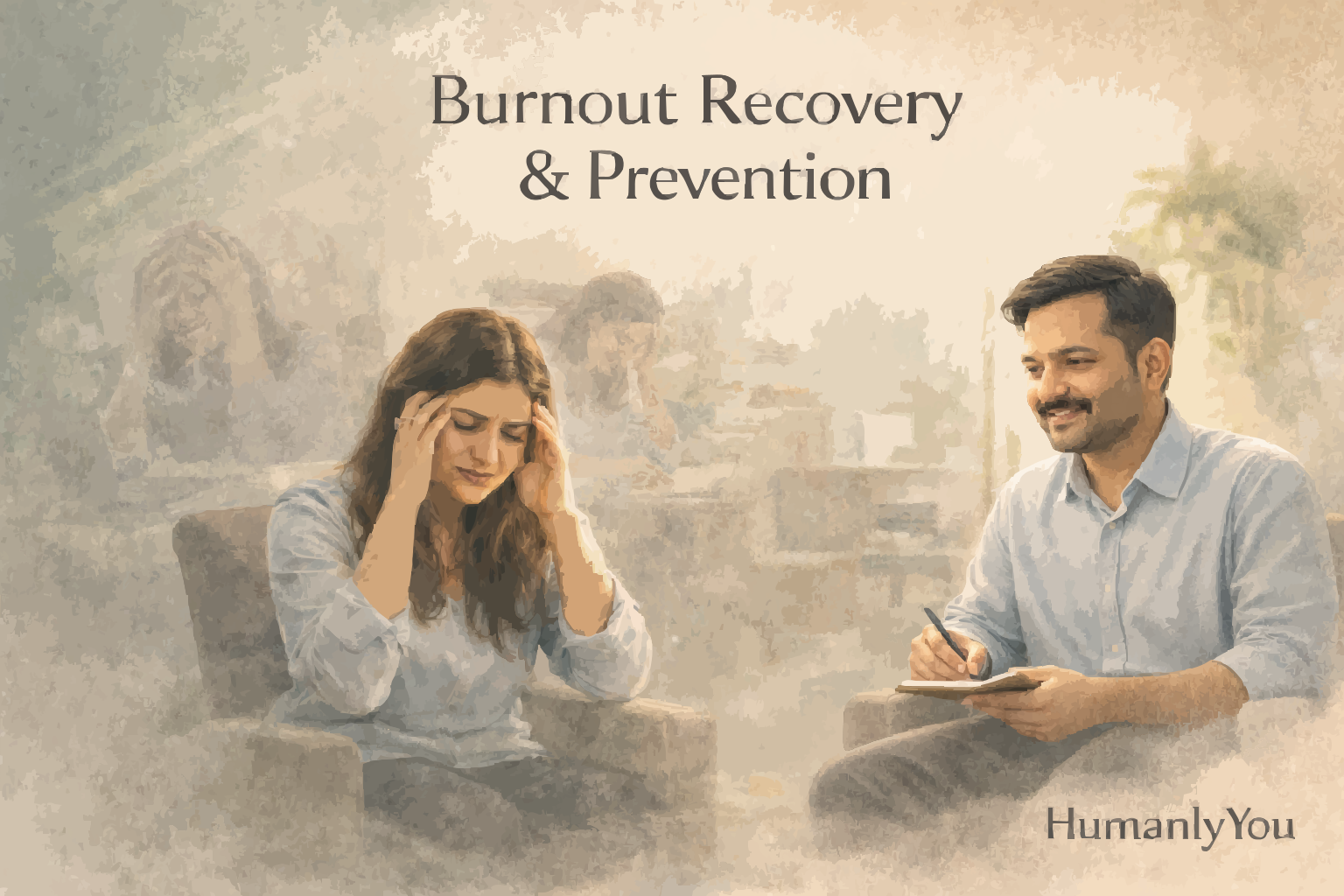
If you’re noticing burnout signs, start with Burnout Recovery & Prevention. If you want a simple first step, begin with a Clarity Call.
Related read: Why rest alone doesn’t fix burnout.